The "Yandere" Obsession TestThe "Yandere" Obsession TestWhen love feels intense, how do insecurity and possessiveness show up for you? Explore your relationship patterns in a playful way. πŸ”₯ 37K+ tested Start Quiz

Signs of a Toxic Relationship: 7 Red Flags You Should Never Ignore

Published on July 9, 2026 by Sally

Opening Note

Relationships should make you feel safe, respected, and valuedβ€”not anxious or controlled. Toxic relationships often develop gradually, making the warning signs easy to overlook. Read on to learn the most common red flags, then take The Yandere Obsession Test to explore whether certain behaviors reflect healthy attachment or unhealthy obsession.

Signs of a Toxic Relationship: 7 Red Flags You Should Never Ignore
Essay 01

What Is a Toxic Relationship?

A toxic relationship is one in which one or both partners consistently create emotional or psychological harm. Instead of helping each other grow, the relationship leaves one or both people feeling stressed, controlled, or emotionally exhausted. Every relationship has disagreements from time to time, but healthy couples work through conflict with honesty and respect. In a toxic relationship, unhealthy patterns become repetitive and gradually replace trust, communication, and mutual support.

Essay 02

1. You Feel More Anxious Than Happy

One of the clearest signs of a toxic relationship is how it makes you feel. If you regularly worry about upsetting your partner, hesitate before expressing your opinions, or feel nervous every time your phone lights up, the relationship may no longer feel emotionally safe. Healthy relationships should bring comfort more often than fear. While occasional conflict is normal, constantly walking on eggshells is not.

Essay 03

2. Jealousy Turns Into Control

Feeling jealous from time to time is completely normal. The problem begins when jealousy becomes an excuse to control your choices or limit your independence. A partner who constantly questions where you are, becomes upset when you spend time with friends, or expects access to your private messages may be acting out of insecurity rather than love. Trust allows both people to have their own lives without constant suspicion.

Essay 04

3. Your Boundaries Aren't Respected

Healthy relationships are built on mutual respect, including respect for personal boundaries. Everyone deserves privacy, personal space, and the freedom to make their own decisions. If your partner ignores your wishes, pressures you into sharing passwords, or refuses to accept the word "no," it may be a sign that control has replaced respect. Love should never require giving up your independence.

Essay 05

4. Arguments Always End With You Feeling Guilty

Disagreements happen in every relationship, but healthy partners focus on solving problems together. In a toxic relationship, conflicts often end with blame, manipulation, or emotional guilt instead of resolution. Over time, you may find yourself apologizing even when you haven't done anything wrong simply to keep the peace. This pattern can slowly damage your confidence and make it difficult to trust your own judgment.

Essay 06

5. Your Self-Esteem Keeps Getting Smaller

Toxic relationships rarely destroy confidence overnight. More often, self-esteem fades gradually through constant criticism, dismissive comments, or feeling like you're never good enough. If you've noticed that you doubt yourself more than you used to or no longer feel like the confident person you once were, it's worth considering whether the relationship is contributing to those feelings.

Essay 07

6. Love Feels More Like Possession Than Partnership

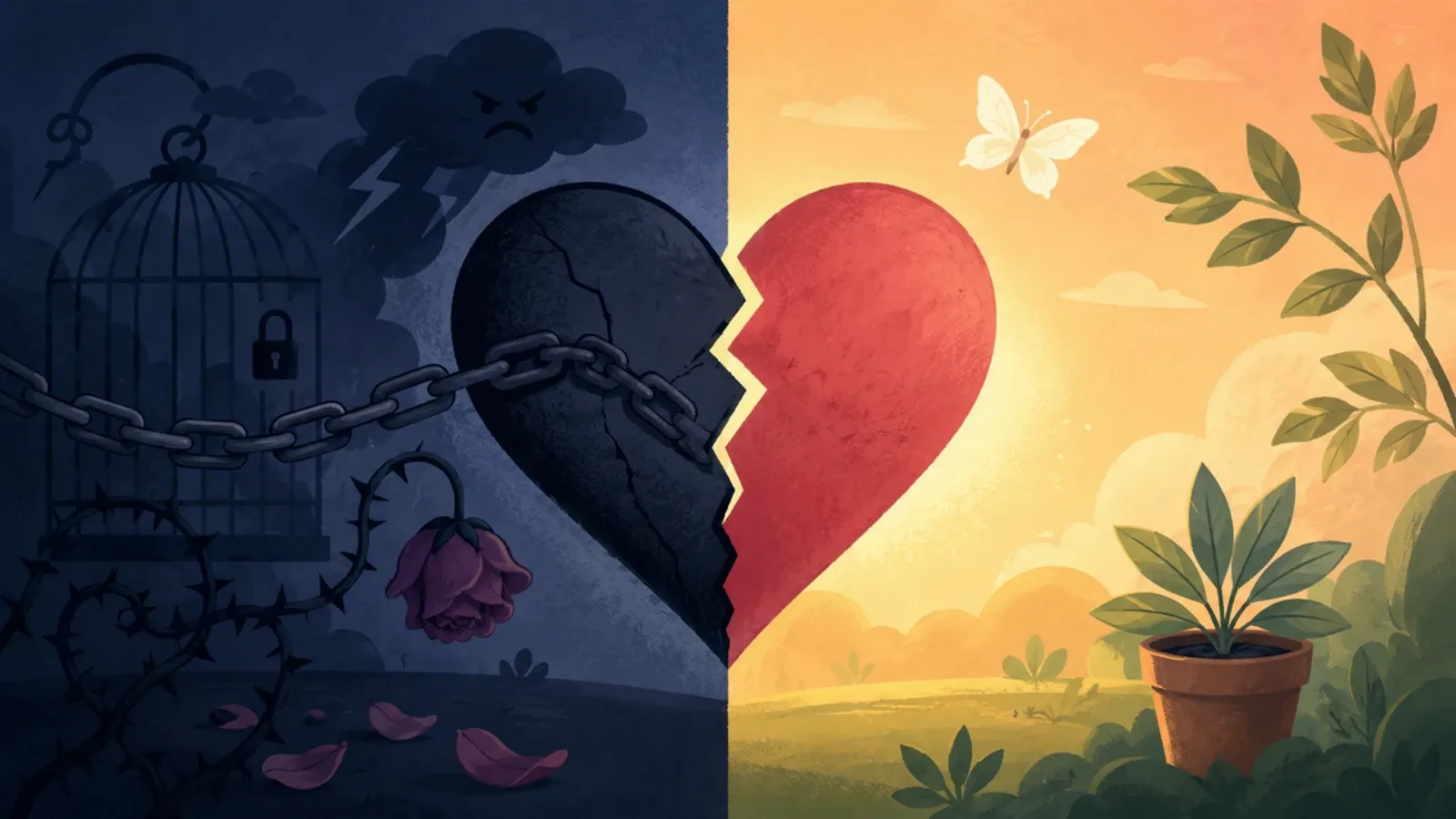
Deep affection shouldn't mean losing your freedom. When someone believes they should control who you talk to, where you go, or how you spend your time, love can begin to look more like possession than partnership. Although movies and social media sometimes romanticize obsessive devotion, healthy love is built on trust, respect, and allowing each person to maintain their individuality.

Essay 08

7. You Stay Because You're Afraid to Leave

Perhaps the most overlooked sign of a toxic relationship is staying because of fear instead of happiness. You may worry that your partner will change, believe no one else will love you, or feel guilty about ending the relationship even though you're unhappy. A healthy relationship should make you feel supported, not trapped. If fear has become the main reason you're staying, it may be time to reflect on whether the relationship is meeting your emotional needs.

β€œHealthy love is built on trust, not control. If you're curious where love becomes obsession, take The Yandere Obsession Test.”