
Your Level of Possessiveness in LoveYour Level of Possessiveness in LoveIs it deep love—or starting to feel like control? Dive into your emotional patterns, explore your boundaries, and uncover what your subconscious is really holding onto. 🔥 46K+ testedStart Quiz

MBTI Love Patterns: Are You Avoidant, Anxious, or Hot-and-Cold?

Published on September 2, 2026 by Sally

Opening Note

Some people withdraw when love requires vulnerability, while others search constantly for proof that the relationship is slipping away. Your MBTI type does not determine your attachment style, but it may shape how your fears, needs, and defenses appear in a relationship.

MBTI Love Patterns: Are You Avoidant, Anxious, or Hot-and-Cold?
Essay 01

The Avoidant Pattern: Talking Without Truly Opening Up

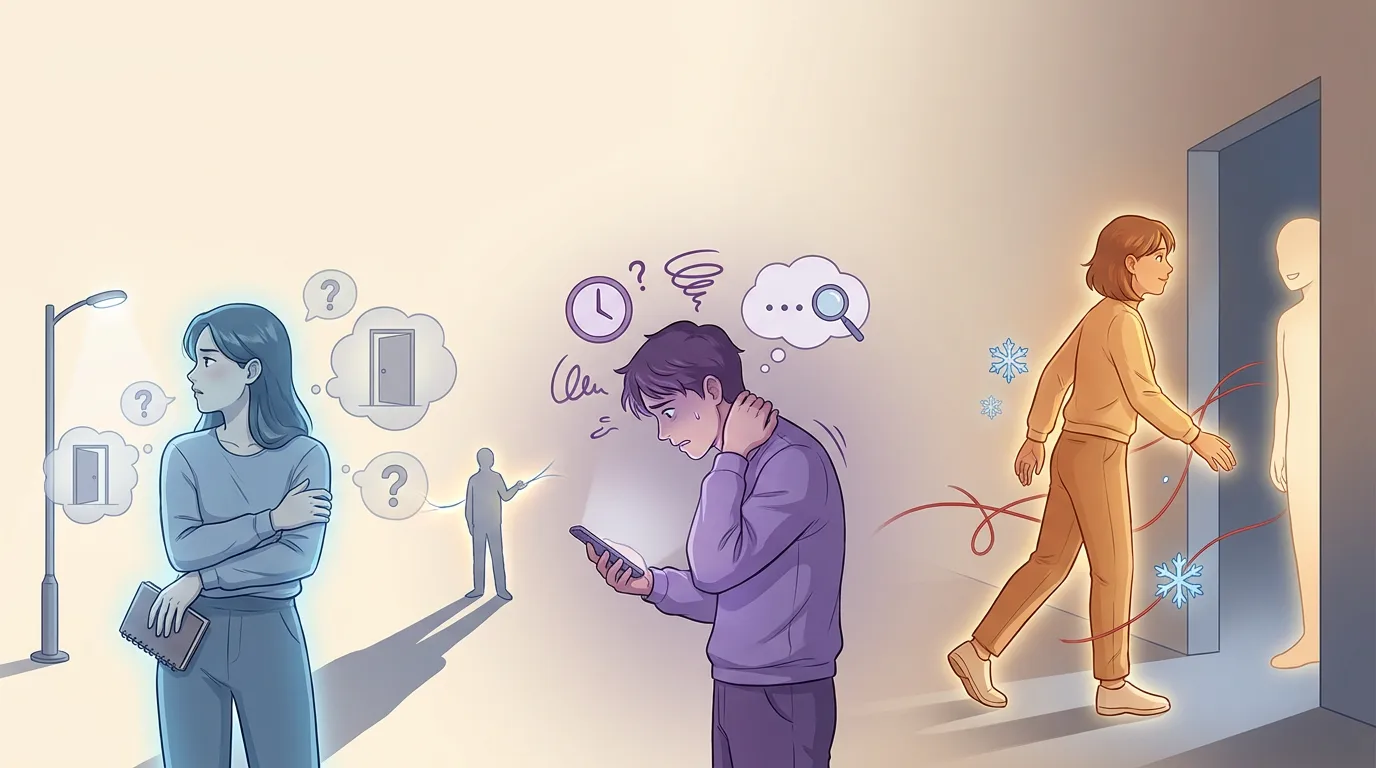
Avoidant behavior does not always look like coldness. Sometimes it looks like agreeing to have a serious conversation, offering a logical explanation, and leaving the other person feeling as though nothing meaningful was actually discussed. INTP, ISTP, INTJ, INFJ, and some INFP personalities may resemble this pattern when emotional intensity becomes overwhelming. Thinking types may analyze the problem instead of exposing the feelings underneath it. Introverted intuitive or feeling types may understand their emotions deeply but need so much private processing time that their partner experiences the silence as rejection. The hidden fear is often not “I do not care.” It may be “If I cannot explain this perfectly, I would rather say nothing,” or “If I let you see how much this affects me, I will lose control.” They can appear calm while privately replaying every detail. This pattern becomes harmful when a need for space turns into chronic emotional unavailability. Healthy distance includes communication and a return; avoidance leaves the other person waiting without clarity.

Essay 02

The Anxious Pattern: Searching for Evidence That Love Is Disappearing

Anxious lovers rarely need a dramatic event to feel unsafe. A shorter reply, a delayed message, or a subtle change in tone can become evidence that their partner is losing interest. INFP, ENFP, ENFJ, and ISFJ personalities may resemble this pattern when their sensitivity to emotional shifts becomes hypervigilance. Their ability to notice another person's mood can be a relationship strength, but uncertainty may turn that awareness against them. Instead of asking, “What else could explain this?” they begin asking, “What did I do wrong?” They may seek reassurance, read old conversations, become unusually accommodating, or test whether their partner will notice their distress. Unfortunately, reassurance often works for only a short time because the deeper fear has not been addressed. The real need is not endless attention. It is emotional consistency: affection that does not suddenly disappear, conflict that does not threaten the entire relationship, and words that match behavior.

Essay 03

The Hot-and-Cold Pattern: Running From Distance, Returning for Hope

The hot-and-cold lover lives inside a painful contradiction. When the other person becomes distant, they retreat before they can be abandoned; when that person shows warmth again, hope pulls them straight back. ENTP, ENFP, INFP, and INTP personalities may display versions of this push-pull response. An ENTP might act detached, then restart the connection through humor. An ENFP or INFP may leave to protect a wounded heart but return when affection reawakens the relationship's possibilities. An INTP may disappear to process the situation, then resume contact as if the emotional interruption never happened. This inconsistency can feel passionate because every reunion brings relief. Yet relief is not the same as security. If neither person addresses the fear behind the cycle, small changes in attention can repeatedly trigger withdrawal, pursuit, and reconciliation.

Essay 04

Your Pattern Is a Defense, Not Your Destiny

MBTI can help describe how a defense appears, but it cannot explain its entire origin. Relationship history, emotional safety, communication skills, and the behavior of a current partner all matter. The same type can act differently in different relationships. An independent ISTP may become anxious with an unpredictable partner, while a sensitive INFP may feel secure with someone who communicates consistently. Even a generally confident ENTP can become hot-and-cold when attraction makes vulnerability feel unusually risky. Instead of asking only, “Which pattern am I?” notice what activates it. Ask what happens immediately before you withdraw, seek reassurance, or run away—and what response you are hoping to receive.

Your MBTI type may influence the form that protection takes, but no personality type is permanently trapped in one relationship pattern.