Asksoul.me

MBTI Compatibility: Which Personality Types Match Best?

Published on June 24, 2026 by Sally

Opening Note

Why do some people connect instantly while others constantly misunderstand each other? MBTI compatibility explores how different personality types communicate, express emotions, and build relationships. While MBTI cannot predict love, it can help you understand personality differences and relationship patterns.

MBTI Compatibility: Which Personality Types Match Best?
BaZi Love SynastryFeatured QuizBaZi Love SynastryStart Quiz
Essay 01

What Is MBTI Compatibility?

MBTI compatibility refers to how well different personality types understand and support each other in relationships. The MBTI system is built around four personality preferences: Extraversion (E) vs. Introversion (I) How you gain energy and interact with others. Intuition (N) vs. Sensing (S) How you collect and interpret information. Thinking (T) vs. Feeling (F) How you make decisions. Judging (J) vs. Perceiving (P) How you approach planning and daily life. A compatible relationship does not mean two people have the same personality. Often, the strongest connections come from understanding and balancing differences.

Essay 02

The Key Factors Behind MBTI Compatibility

1. Communication Style Different personality types often express themselves and process conversations in different ways. For example, a Feeling type may seek emotional understanding and reassurance first, while a Thinking type may naturally focus on analyzing the situation and finding a practical solution. Neither approach is wrong, but misunderstandings can happen when people assume their own communication style is the “right” one. Good compatibility often comes from learning what your partner needs and asking yourself: “Am I truly understanding them, or am I only trying to express my own thoughts?” 2. Emotional Connection People build emotional connections in different ways. Some personality types value deep conversations, emotional sharing, and feeling understood, while others may show care through actions, reliability, and practical support. For example, Feeling types often appreciate empathy and emotional validation, while Thinking types may express affection by offering advice, solving problems, or helping in practical ways. Recognizing these differences can help couples avoid unnecessary conflicts and better understand how each person gives and receives love. 3. Lifestyle Differences MBTI preferences can also influence everyday habits and relationship expectations. The Judging (J) and Perceiving (P) differences are often noticeable in how people organize their lives. A Judging type may prefer clear plans, routines, and knowing what comes next, while a Perceiving type may enjoy flexibility, spontaneity, and adapting as things happen. These differences can create attraction because partners may bring different strengths to the relationship, but they also require patience, communication, and a willingness to compromise.

Essay 03

Popular MBTI Compatibility Matches

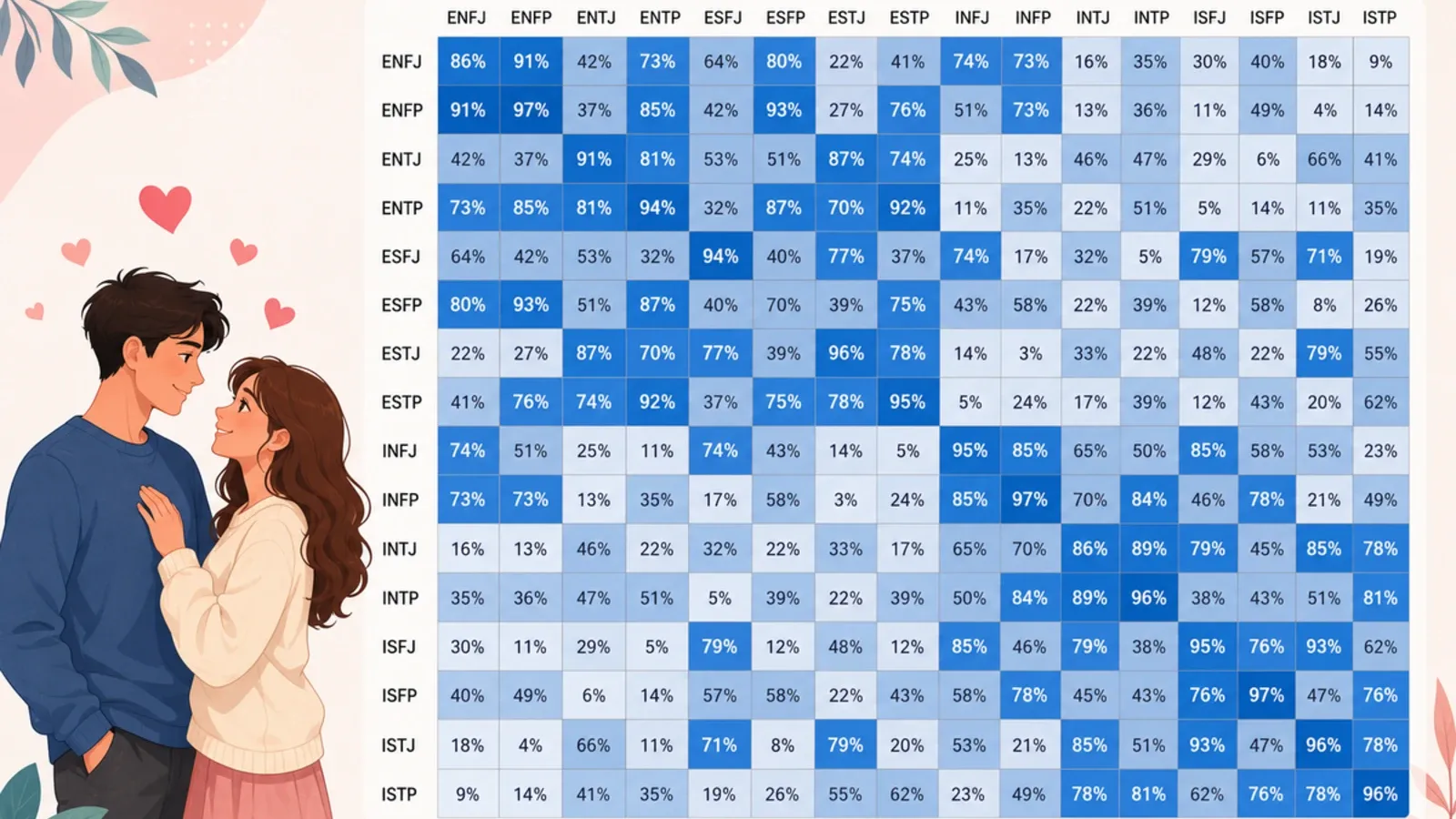
MBTI is not a strict rulebook for relationships, but some personality combinations are often discussed because they may naturally balance each other’s strengths and weaknesses. These pairings are not guaranteed to succeed, but they can offer interesting insights into how different personalities may connect, communicate, and grow together. INFP + ENFJ: The Idealist & The Supporter This pairing is often associated with emotional depth, shared values, and a strong desire to help others. INFPs may bring creativity, imagination, and a deep sense of personal values, while ENFJs often bring encouragement, emotional awareness, and strong communication skills. They may enjoy meaningful conversations and supporting each other’s personal growth. However, they may need to balance their idealistic expectations with practical decisions in daily life. INTJ + ENFP: The Planner & The Explorer The INTJ and ENFP combination is often considered an interesting match because they approach life from very different perspectives. INTJs may focus on strategy, planning, and long-term goals, while ENFPs often bring curiosity, energy, and new ideas. This difference can create strong intellectual attraction and encourage both people to see the world in new ways. Their biggest challenge may be finding balance between structure and spontaneity.

Essay 04

Are Similar MBTI Types More Compatible?

Not always. People with similar personality types may understand each other quickly because they often share similar ways of thinking, communication styles, or habits. However, they may also share the same weaknesses, which can create challenges if both people struggle with the same areas. On the other hand, different personality types can complement each other by bringing different strengths into a relationship. True compatibility is not about finding someone exactly like you, but about respecting differences and learning how to work together.

Essay 05

Common MBTI Compatibility Mistakes

One common misunderstanding about MBTI compatibility is believing that people with the same personality type will automatically have a perfect relationship. While similar personalities may feel comfortable together, personality type is only one part of a successful connection. Shared values, communication skills, emotional maturity, and life goals often play an even bigger role. Another mistake is assuming that opposite personality types cannot work. In reality, many couples with different personalities build strong relationships because they learn from each other and appreciate qualities they do not naturally have. Differences can create challenges, but they can also create balance and growth. The biggest mistake is treating MBTI as a prediction tool that decides whether a relationship will succeed or fail. MBTI can help people understand their tendencies and improve communication, but it cannot determine attraction, commitment, or long-term compatibility.

Essay 06

How to Improve MBTI Compatibility

Improving compatibility is less about changing your personality and more about understanding each other better. Start by recognizing that different reactions do not always mean a lack of care. People may express emotions, solve problems, and show affection in different ways depending on their personality preferences. Clear communication is also essential. Instead of expecting your partner to guess your needs, explain what you feel and what you need from them. At the same time, try to appreciate the strengths your partner brings into the relationship. Someone different from you may offer perspectives, habits, or emotional support that help you grow. Ultimately, strong relationships are built through patience, understanding, and effort. Personality types may explain some patterns, but the way two people choose to communicate and support each other matters most.

“MBTI compatibility is not about finding a perfect personality match. It is about understanding how different people communicate, connect, and grow together. ”