Love TarotGently explore your relationship questions, where the connection is heading, and the person on your mind. 🔥 33K+ testedStart Quiz

Astrology Aspects Explained: Conjunction, Square, Trine & Opposition

Published on October 14, 2026 by Sally

Opening Note

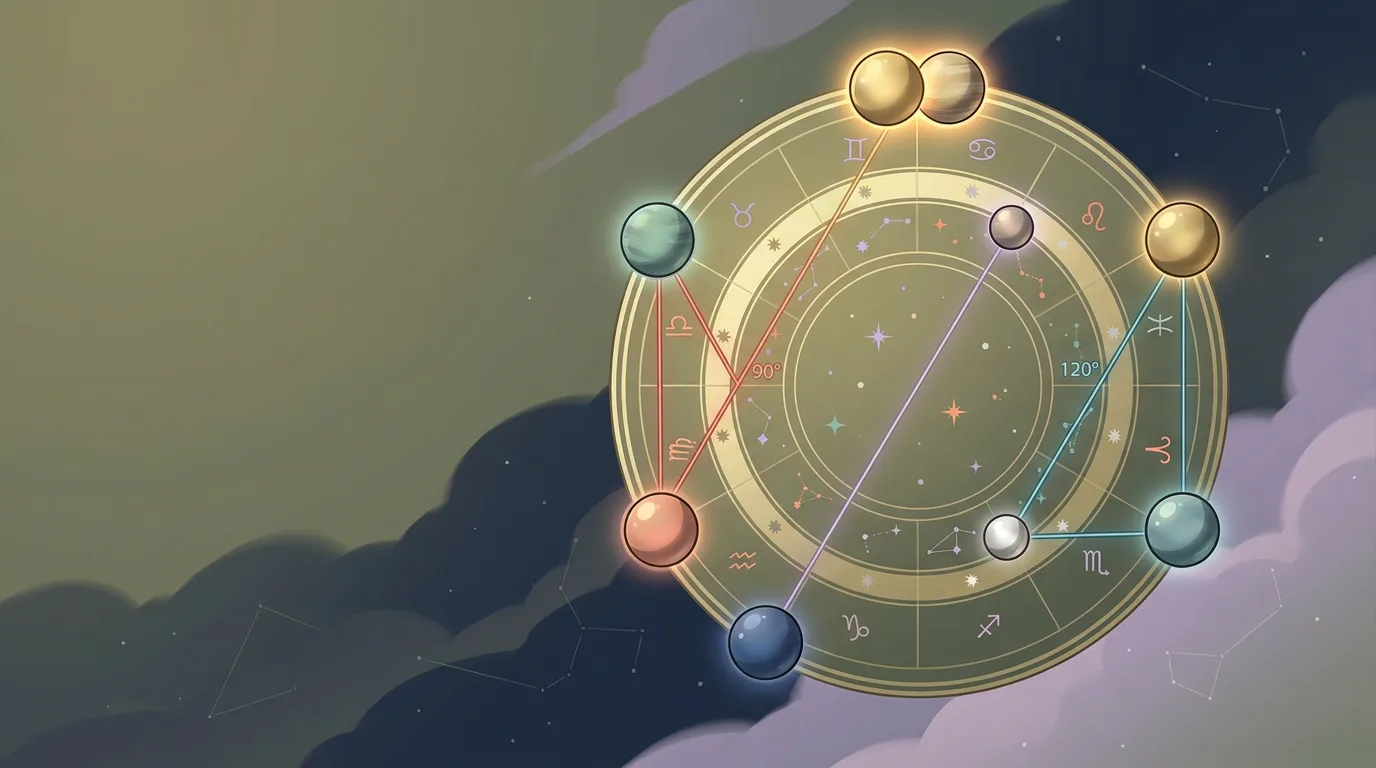
Astrology aspects are the angular relationships between planets in a birth chart. Signs and houses show where a planet's energy appears; aspects show how planetary energies interact, shaping patterns in personality, emotion, love, and daily life.

Astrology Aspects Explained: Conjunction, Square, Trine & Opposition
Essay 01

What Are Astrology Aspects in a Birth Chart?

Astrology aspects are the angles between planets, showing how their energies interact rather than where they appear in life. On a birth chart wheel, you can spot them by looking for lines connecting planetary symbols, then checking the planets' degrees: the angle between their positions determines the aspect. Not every chart displays the same lines, so a chart's aspect table can make them easier to identify. These connections are different from houses, which divide the chart into life areas. Two people may share the same Sun sign yet respond differently under pressure or in relationships because their planets form different aspects. The sign describes a planet's style; its aspects show how that style meets other drives.

Essay 02

Conjunction: When Planetary Energies Combine

A conjunction occurs when two planets sit at or near 0°, blending their energies so closely that one can amplify or color the other. With Sun conjunct Mercury, a person's sense of self may be closely tied to thought and communication. In a date-night disagreement, they might explain their position immediately because putting it into words feels central to being understood. At work, that same connection can support quick thinking and a persuasive presentation. But a conjunction is not automatically beneficial: someone may find it hard to step back from their own ideas or hear criticism without feeling personally challenged. The planets, signs, and houses help show how this concentrated combination comes through.

Essay 03

Square: Pressure That Can Prompt Growth

A square forms at 90° and often describes friction between needs or impulses that do not automatically cooperate. Moon square Mars, for example, can bring feelings and reactions into quick contact: after a tense workday, a small interruption at home may spark a sharper response than the moment seems to warrant. In romance, one person may want comfort while also feeling compelled to confront the problem right away. That tension can be tiring, but it is not a sign of a doomed relationship or a bad chart. It may also build courage and initiative, especially when the person learns to recognize what is driving the reaction. The specific expression depends on the full chart.

Essay 04

Trine: Natural Flow and Untapped Strength

A trine forms when planets are about 120° apart, creating an easy exchange that can feel like a natural talent. With Sun trine Jupiter, confidence may pair with optimism: someone might volunteer to lead a project, make a persuasive presentation, or encourage a partner to try something new. Because these qualities come readily, they can also go unexamined; confidence alone does not guarantee good judgment, recognition, or success. The person may assume opportunities will work out and overlook the effort a goal requires. A trine describes a supportive current in the chart, not a promised outcome. Its expression still depends on the planets involved, their signs and houses, and the choices made in real situations.

Essay 05

Opposition: Balancing Two Strong Pulls

An opposition occurs when planets sit about 180° apart, highlighting a tension between needs that may seem to belong to different people. With Venus opposite Saturn, a person can want affection and closeness yet feel cautious about trusting that it will last. In dating, they might read a delayed reply as rejection, then keep their own feelings tightly guarded. The same pattern can show up at work as a desire for approval alongside fear of criticism. This aspect does not mean a relationship is doomed; it can make competing priorities more visible, especially through other people. The challenge is not choosing one side forever, but recognizing how both the wish for connection and the need for security shape behavior.

Essay 06

Sextile: Opportunity That Needs Participation

A sextile forms when planets are about 60° apart and suggests compatible energies that can create openings when actively used. Unlike a trine, which may feel effortless and familiar, a sextile can be quieter: a talent or helpful connection is available, but it may not develop unless someone responds. For example, a person may have an easy rapport with a colleague who offers useful feedback, yet still need to ask questions and follow through before that rapport supports a project. In relationships, a sextile can make honest conversation feel possible without ensuring it happens. It points to cooperation and potential, not automatic results; the opportunity becomes meaningful through attention, timing, and choice.

Essay 07

What Is an Orb in Astrology?

An orb is the number of degrees by which a planet-to-planet angle can differ from an exact aspect and still count. A conjunction need not land at precisely 0°, for instance; astrologers may still read it when the planets are a few degrees apart. The closer the angle, the more noticeable many astrologers consider the aspect, but there is no single cutoff used by everyone. Some traditions allow wider orbs, especially for major aspects or luminaries, while others prefer tighter ranges; standards can also vary by aspect. So a chart near a boundary may be read differently across sources. Treat orb as a measure of emphasis, not a guarantee of an outcome.

Essay 08

How to Read Aspects in the Whole Birth Chart

A birth chart makes most sense when aspects are read with the planets, signs, and houses together: the planets describe what is interacting, signs shape its style, and houses point to life areas. For example, Mercury square Saturn might show cautious communication in love, where someone edits a message repeatedly before sending it. At work, the same tension could appear as careful preparation under deadline pressure; emotionally, it may feel like second-guessing a first thought. Mercury's sign and house, Saturn's sign and house, and the rest of the chart change how that pattern plays out. This is why similar sign placements can look different—and why one aspect cannot predict a whole life.

“The same chart placements can tell very different stories when the planets interact differently.”