Love TarotGently explore your relationship questions, where the connection is heading, and the person on your mind. 🔥 33K+ testedStart Quiz

7th House Synastry: Love, Marriage and Planet Overlays

Published on October 21, 2026 by Sally

Opening Note

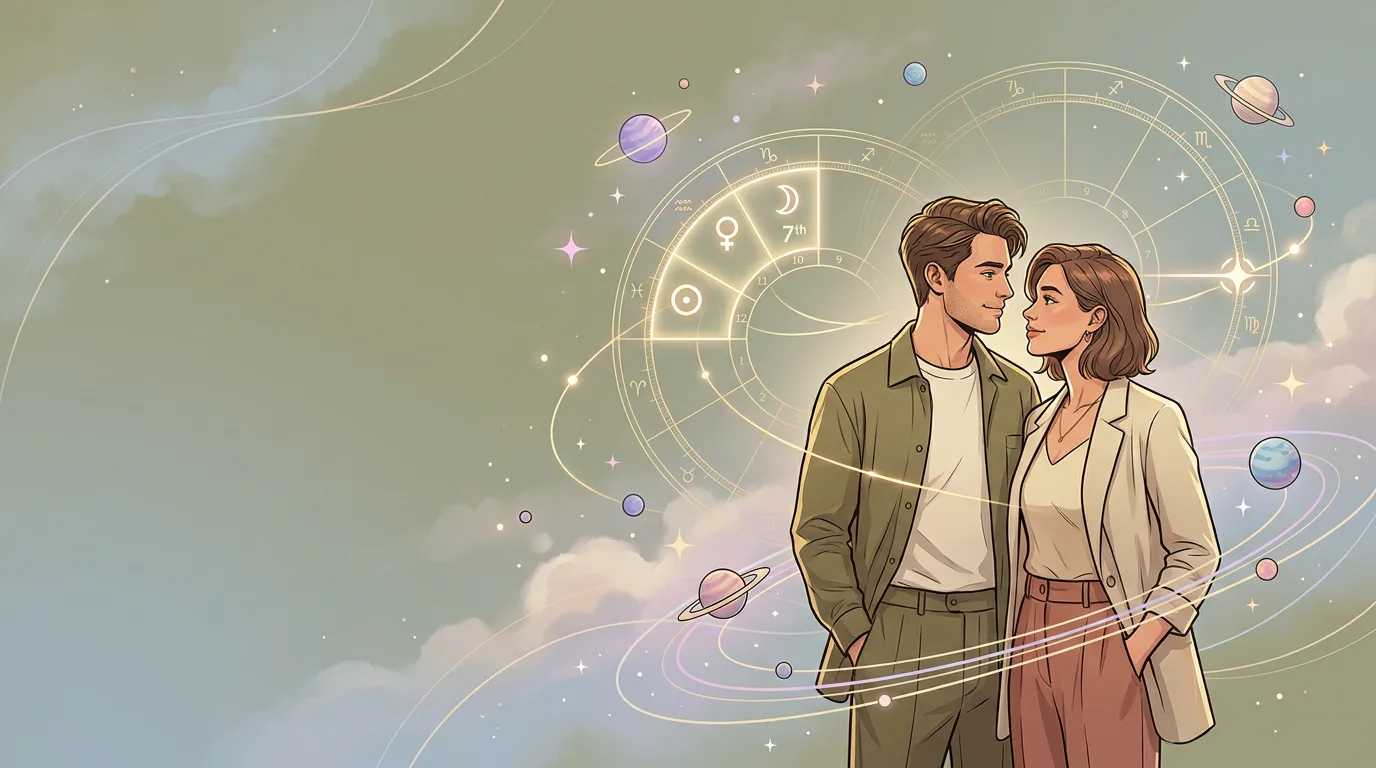
7th House synastry describes one person's planets falling in another person's birth chart seventh house, linked with marriage, long-term partners, and one-to-one relationships. Someone activating your 7th House may feel like partner material, but that doesn't guarantee compatibility or marriage; what matters is how you both experience attraction, commitment, and relationship expectations.

7th House Synastry: Love, Marriage and Planet Overlays
Essay 01

What Is 7th House Synastry?

7th House synastry happens when one person's planets fall in the other person's seventh house, the area of a birth chart associated with committed partnerships and one-to-one bonds. Your own natal seventh house describes qualities you may seek or encounter in partnership; an overlay shows how a particular person activates that part of your chart. It differs from a standard synastry aspect, which describes the angle between two planets and how their traits interact. For example, a tense Mercury–Moon aspect may shape how you talk about feelings, while a planet in the seventh house can make partnership itself feel central. The planet person and house person may experience that emphasis differently; it signals a theme, not a marriage promise.

Essay 02

How to Find House Overlays in a Synastry Chart

To identify a house overlay, compare both birth charts in a synastry chart and check which houses contain each person's planets. The direction matters: your Venus in someone else's seventh house is not the same overlay as their Venus in yours, and one person may feel more strongly drawn into the partnership theme. Many chart tools show each person's planets against the other's house cusps, so confirm whose chart is being viewed before interpreting placements. Accurate birth times matter because house cusps depend on the time and place of birth. If either person's time is unknown or approximate, the house placements may be unreliable; avoid treating a possible overlay as a definite relationship signature.

Essay 03

Sun in the 7th House Synastry

With the Sun in someone's seventh house, the Sun person may feel especially noticed and appreciated, while the house person may see them through a partner-shaped lens. On an early date, the house person might quickly imagine how this person would fit into everyday life; the Sun person may enjoy being treated as someone significant. That mutual focus can support recognition, but it can also make the house person project an ideal role onto someone they are still getting to know. When defining the relationship or making plans together, notice whether admiration includes room for each person's separate identity. This overlay can make partnership feel compelling, but compatibility still depends on the whole relationship—not the placement alone.

Essay 04

Moon in the 7th House Synastry

Moon in the 7th House synastry often makes emotional responsiveness feel central to the relationship. The Moon person may instinctively offer care, while the house person can feel unusually understood—or become aware of how much reassurance they want from a partner. On an early date, a remembered detail or a gentle check-in may create closeness faster than grand romantic gestures. Over time, that sensitivity can support shared routines, but it can also turn into dependence if one person is expected to manage every mood. During a disagreement, the Moon person may seek immediate comfort while the house person wants to restore harmony. Their needs can differ, even when both value emotional security.

Essay 05

Venus in the 7th House Synastry

Venus in the 7th House synastry often brings an easy sense of romantic fit, but it can also invite idealization. The Venus person may enjoy expressing affection and feel welcomed; the house person may see them as matching a cherished picture of a partner. Early dates can feel polished and mutually considerate, from choosing a restaurant to making each other feel attractive. Once a couple shares a home or makes plans, however, affection has to meet everyday preferences about money, chores, and time. The overlay can encourage tenderness and intimacy, not certify marriage. If the house person treats Venus as proof of a perfect match, ordinary differences may feel more disappointing than they need to.

Essay 06

Mars in the 7th House Synastry

Mars in the 7th House synastry can create strong pursuit and lively friction in the same bond. The Mars person may feel driven to initiate, flirt, or state what they want; the house person may experience that energy as exciting and motivating, or as pushy when boundaries are crossed. On a first date, direct chemistry can make plans happen quickly. Later, the same assertiveness may surface in arguments about timing, shared responsibilities, or a major decision. This placement does not mean a relationship is doomed: disagreement can reveal what each person is willing to negotiate. The key difference is whether Mars energizes cooperation or turns every compromise into a contest.

Essay 07

Saturn and Jupiter in the 7th House Synastry

Saturn and Jupiter in the seventh house describe different relationship climates: one emphasizes reliability and limits, the other encouragement and shared growth. With Saturn there, the Saturn person may show care through consistency or caution, while the house person can feel supported—or as if every commitment comes with a test. This may surface when deciding whether to move in. Jupiter can make the house person feel championed, while the Jupiter person brings optimism; yet one may promise more than the other can sustain. During a shared decision about marriage or money, clarify expectations. Saturn is not a verdict of failure, nor Jupiter a guarantee of ease; both magnify how you negotiate responsibility and possibility.

Essay 08

How to Read 7th House Synastry in the Full Chart

An overlay is a starting point, not a relationship verdict. Check the sign and condition of the 7th House ruler, planets near the Descendant, and Synastry Aspects that support or strain communication, affection, and conflict. Then compare both complete birth charts: one person may experience partnership as a central need while the other expresses it more cautiously. This difference can show up when choosing where to live or how quickly to define the relationship. Someone can feel unmistakably like partner material on a first date, yet everyday decisions reveal mismatched expectations. Look for repeating themes across the charts and how you actually handle them; long-term potential rests on mutual choices, not one compelling overlay.

“Partner material isn't the same as a guaranteed match.”