Live Tarot ReadingTalk one-on-one with a professional tarot reader and find clarity around relationships, choices, and your direction in life. 🔥 71K+ testedStart Quiz

The 12 Houses in Astrology: Meanings and How to Read Them

Published on October 15, 2026 by Sally

Opening Note

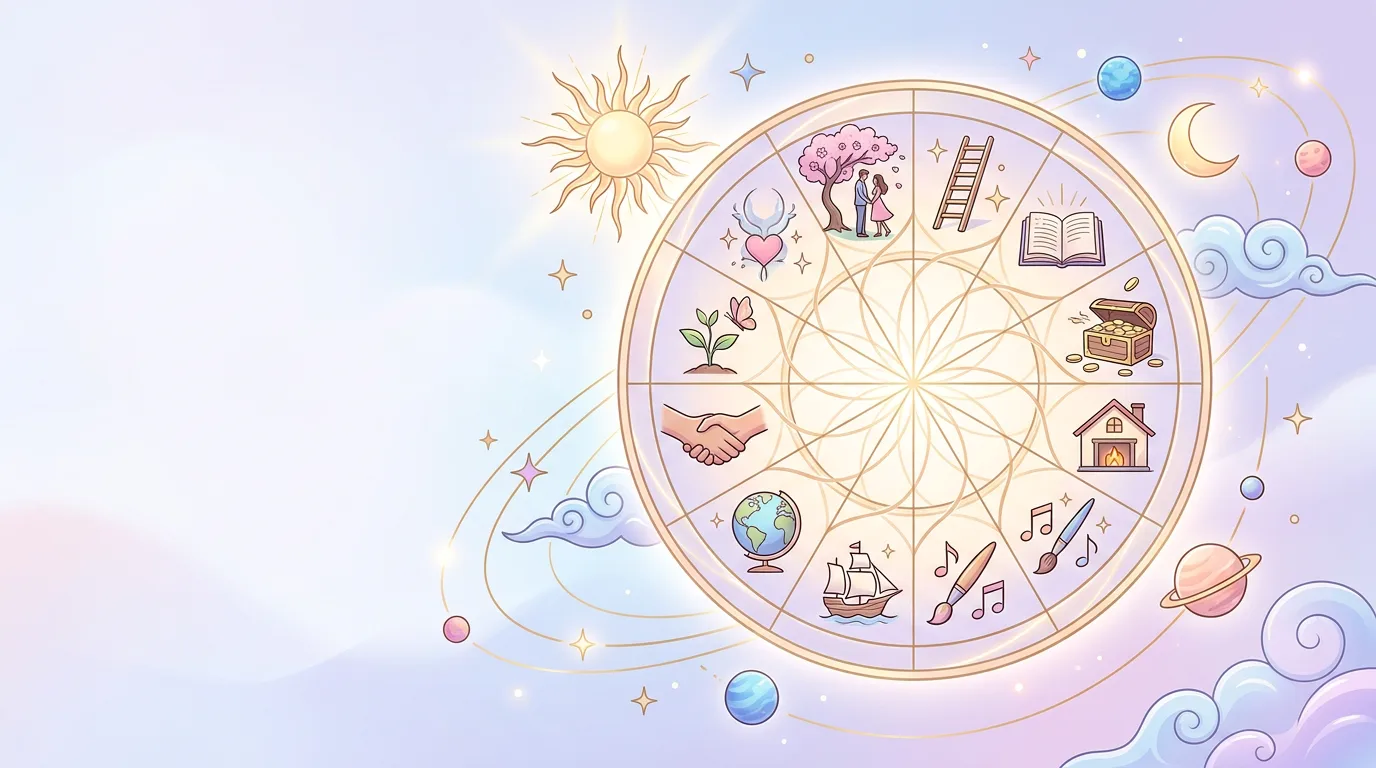
Astrology's 12 houses divide a birth chart into life areas, from identity and relationships to work and inner life. Planets show what energy is present, signs describe how it expresses itself, and houses reveal where it tends to unfold—a useful foundation for reading your birth chart.

The 12 Houses in Astrology: Meanings and How to Read Them
Essay 01

What Are the 12 Houses in Astrology?

The 12 houses are sections of a birth chart that describe different areas of life, such as identity, home, relationships, and career. They are not the same as the 12 zodiac signs: a house points to a life area, while a sign describes a style of expression. Planets add another layer by representing energies or functions. For example, Venus in the 10th house can bring themes of connection, taste, or harmony into public life and career. No house is simply equivalent to a sign; together, these chart factors offer a more specific picture.

Essay 02

How to Find the Houses in Your Birth Chart

A birth chart wheel is divided into 12 houses, beginning with the Ascendant, or rising sign, at the start of the 1st house. The boundary that begins each house is its cusp. A planet's position in the chart shows which house it occupies, connecting its themes with that area of life. The house layout depends partly on the house system used. In Whole Sign, each sign forms one complete house; in Placidus, house sizes can vary according to birth time and location. As a result, some planets may fall in different houses under different systems.

Essay 03

1st House: Self-Image and First Impressions

The 1st House describes how you enter situations: your sense of self, visible style, and the first impression you make. At work, it can show whether you tend to take initiative or wait to read the room; socially, it colors how readily others notice you. Mars here, for example, may bring a direct, energetic way of meeting new people. This house is not just physical appearance, nor does it define your whole personality; it marks the chart's most immediate, outward-facing starting point.

Essay 04

2nd House: Money, Resources, and Values

The 2nd House concerns what you earn, own, and rely on, as well as the values that shape your choices. It may show up in how someone budgets, negotiates pay, or decides what feels worth spending on. Saturn here, for instance, can point to a cautious approach to building financial security and a strong sense of responsibility around resources. This house is not simply a measure of wealth: it also speaks to personal priorities and the foundations of self-worth.

Essay 05

3rd House: Communication, Learning, and Siblings

The 3rd House describes everyday communication, early learning, and relationships with siblings or neighbors. It can show up in how you handle a busy group chat, ask questions in class, or share responsibilities with a brother or sister. Mercury here may bring a strong urge to talk, write, or gather information; Saturn may make someone more deliberate about speaking up. This house is not just about being good at school—it also reflects how you exchange ideas in daily life.

Essay 06

4th House: Home, Roots, and Emotional Security

The 4th House points to home, family roots, and the private foundations that help you feel secure. It may be reflected in the rituals you keep after work or the way you arrange a home to feel like a refuge. The Moon here can make emotional ties to home especially prominent, while Mars may bring more activity or friction into domestic life. This house does not guarantee a certain kind of childhood or family; it also speaks to the sense of belonging you build for yourself.

Essay 07

5th House: Romance, Creativity, and Self-Expression

The 5th House is where pleasure, creativity, romance, and self-expression take center stage. It can describe how someone approaches dating, makes art, or enjoys attention for a personal project. For example, Venus here may bring ease in creative collaboration or a love of romantic gestures, while Saturn may make a person more deliberate about sharing their work. This placement does not guarantee fame, children, or constant fun; it points to themes of play and creation, not a fixed outcome.

Essay 08

6th House: Daily Work, Habits, and Health

The 6th House describes the routines that keep life moving: daily work, habits, and the ways you care for your body. It shows up in how someone organizes a busy workday, handles recurring tasks, or builds a workable exercise routine. Mercury here may thrive on varied assignments and constant coordination; Saturn may favor structure and steady systems. This house is not a verdict on health or a sign of low-status work. It focuses on everyday maintenance, not career recognition, which belongs more directly to the 10th House.

Essay 09

7th House: Marriage, Partnerships, and One-to-One Relationships

The 7th House focuses on one-to-one relationships, including marriage, committed partners, and business partnerships. It shows how someone meets another person as an equal: at work, a strong 7th-house emphasis may draw attention to collaboration or negotiation, while Venus here can make harmony and affection especially important in partnership. This house is not simply a marriage forecast, though; it also describes contracts, rivals, and the qualities someone learns to navigate through close exchanges.

Essay 10

8th House: Shared Finances, Intimacy, and Transformation

The 8th House concerns shared money, intimacy, trust, and changes that come through dependence or vulnerability. It can surface when partners combine finances, negotiate debt, or decide what to keep private; Saturn here may make trust feel earned slowly, with clear boundaries around shared obligations. Despite its reputation for dark predictions, this house does not guarantee loss or crisis. It describes how people handle entanglement and rebuild a sense of agency through it.

Essay 11

9th House: Higher Education, Travel, and Beliefs

The 9th House covers higher education, long-distance travel, belief systems, and the search for a wider perspective. It may appear in a student choosing a field that challenges their assumptions, or someone whose work involves international clients. With Mercury here, a person might learn through debate, languages, or publishing; this describes a style of exploring ideas, not a guarantee of academic success. A common misconception is that the 9th House is only about travel: it also shapes the convictions people carry home.

Essay 12

10th House: Career, Public Image, and Achievement

The 10th House speaks to career direction, public reputation, and the kind of contribution someone hopes to make over time. It can show up when a person is trusted to lead a project or becomes known for a particular craft. Saturn here, for example, may bring a careful, responsibility-first approach to professional goals, though outcomes depend on choices and circumstances. This house is not simply a job title or promise of fame; it describes how ambition and public responsibility take shape.

Essay 13

11th House: Friendships, Community, and Long-Term Goals

The 11th House describes friendships, communities, and long-term hopes—the people and shared causes that help a future feel possible. At work, it may show how someone contributes to a team or professional network; socially, Venus here could bring ease in forming friendships through shared interests. Someone with Mars here might organize a group around a goal. This house is not simply about popularity: it also concerns collaboration and the wider vision that gives connections direction.

Essay 14

12th House: The Subconscious, Solitude, and Inner Life

The 12th House relates to the subconscious, solitude, hidden matters, and the inner life that is not always visible to others. Someone with the Moon here, for example, may need quiet time to process feelings after a demanding workday, while Neptune could heighten imagination or blur boundaries in private settings. This house can also describe retreat, reflection, or things handled behind the scenes. It does not automatically mean secrets, isolation, or misfortune; its themes can be subtle and personal.

Essay 15

How to Read the Houses Together

To interpret a house, start with its cusp sign, then consider the house ruler, any planets placed there, and the aspects those planets make; together, these details add context to the life area it describes. An empty house does not mean that part of life is missing, and its boundaries can shift depending on the house system used. Explore your full birth chart to see how your planets and houses work together.

“The houses show where your chart comes to life.”